
Why Jessie Murph’s '1965' Music Video Is So Polarizing
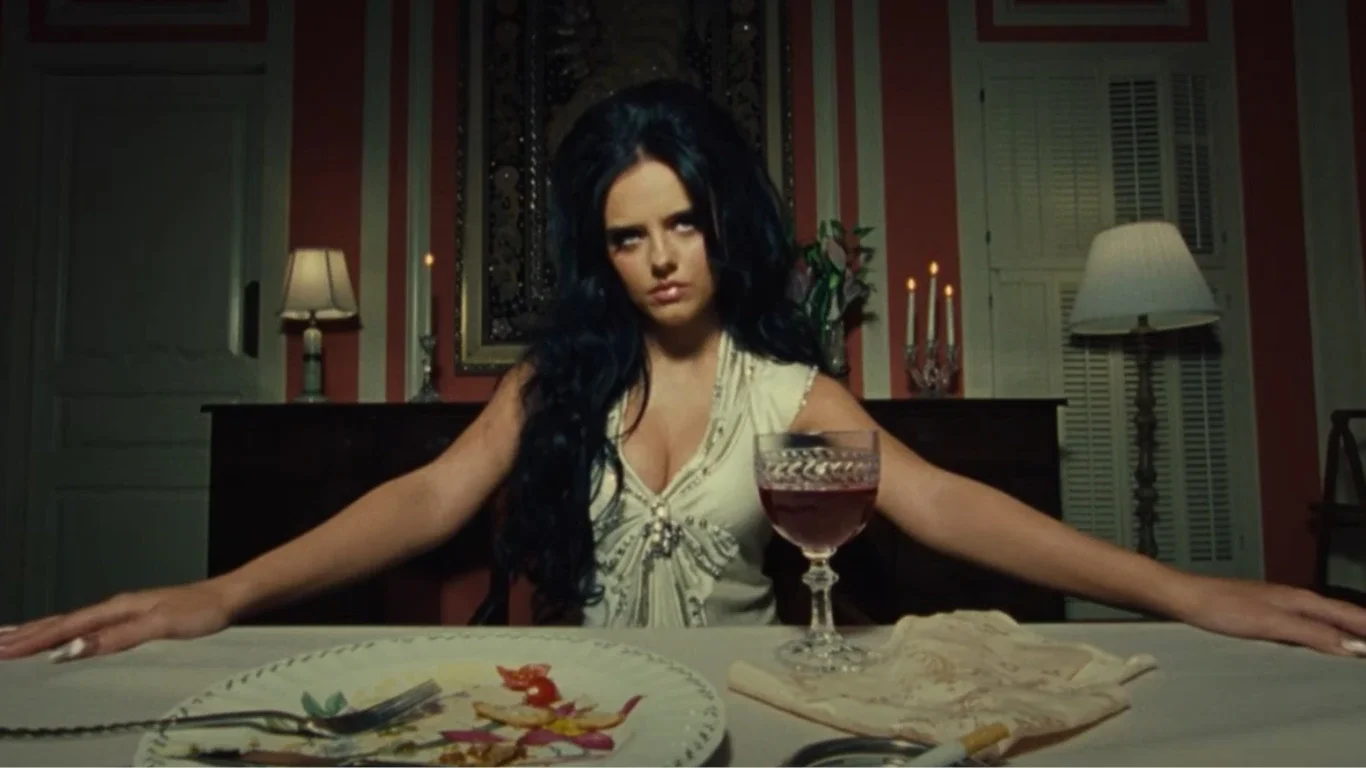
The Violence Beneath the Vintage: Inside Jessie Murph’s “1965”
Pop music loves an easy throwback. It is comforting to borrow the aesthetics of the past when the present feels empty or creatively stagnant. But when singer-songwriter Jessie Murph released the music video for her single “1965”—a standout track from her album Sex Hysteria—the reaction was anything but a nostalgic sigh. It felt more like a cultural car crash.
Instead of serving as a cozy, vintage-hued retreat, the video weaponizes mid-century iconography to stage a brutal, deeply ambiguous intervention into modern gender dynamics. It has quickly become one of the most polarizing musical moments of recent months, forcing an uncomfortable conversation about where social critique ends and savvy shock marketing begins.
From Raw Authenticity to Planned Provocation
To understand why “1965” feels like such a hard pivot, you have to look at Murph’s journey. The Alabama-born artist built her core Gen Z fanbase on a very specific brand of unpolished, deep-South realism. Emerging through early streaming releases and TikTok previews, she sounded like someone reading directly from a bruised diary, dealing with toxic relationships, family instability, and addiction in a raw country-trap style.
“1965” changes the game. It marks her transition from a survivor narrating her trauma to a director staging it. Sonically, the track leans on a heavy retro-soul architecture—dramatic piano chords and weeping strings layered over a thick, sub-bass low end. The arrangement clearly evokes the tragic blueprint laid down by Amy Winehouse, but Murph’s vocal delivery strips away any brassy optimism. Her voice is raspy, exhausted, and thoroughly modern.
The Cinematic Language of Captivity
The video itself doesn't look or feel like a standard, glossy pop clip. It borrows heavily from the suffocating, candy-coated dread of films like Don’t Worry Darling and the pristine paranoia of The Stepford Wives.
Instead of using kinetic, handheld camera movements, the director relies on rigidly static framing. The camera sits back, voyeuristic and cold, trapping Murph in the center of the frame like a specimen.
Visual ElementThe Aesthetic ChoiceEmotional ImpactColor PaletteOversaturated Technicolor pastels (mint greens, soft peaches)Creates a sickening, artificial veneer of suburban perfection.LightingStark Chiaroscuro slicing through window blindsCasts heavy, prison-like bar shadows across the domestic space.AnachronismsA modern iPad resting on a retro formica tableSnaps the viewer out of the period piece; connects the past to the digital present.
There is a bizarre, deeply unsettling contrast between the domestic perfection and the underlying violence. Every object feels heavy with unspoken misery. When the video culminates in a slow-motion, low-angle shot of Murph placing a chrome firearm into her abusive partner’s mouth, the violence doesn't feel explosive—it feels inevitable, quiet, and horribly clinical.
Tragic Hyperbole and Digital Dating Burnout
Lyrically, the song is driven by a profound exhaustion with the digital landscape of modern romance. Weary of late-night "Where you at?" texts and the low-stakes cruelty of being ghosted on Snapchat, Murph sings about a radical, desperate trade-off:
“I might get a little slap-slap, but you wouldn't hit me on Snapchat / Don't fuckin' text me at 2 AM sayin', 'Where you at, at?'”
— Jessie Murph, 1965
The central line of the chorus—“I think I'd give up a few rights / If you would just love me like it's 1965”—has understandably ignited internet firestorms. Taken literally, it reads as a deeply regressive, anti-feminist surrender. But listening to the grit and sarcasm in her delivery, it plays more like a dark joke, a piece of tragic hyperbole.
Murph is channeling a very specific modern alienation. She is suggesting that contemporary intimacy has become so hollowed out by screens that a historical era defined by systemic disenfranchisement can be perversely romanticized as a fair price to pay for genuine, undivided attention. Like her contemporary Ethel Cain, who maps the intersections of Southern Gothic trauma and abuse, or Lana Del Rey, the pioneer of melancholic Americana, Murph treats the past not as a golden age, but as a theater to explore modern damage.
The Attention Economy: Critique vs. Bait
Yet, we have to look at what this video actually achieves in the real world. In a streaming ecosystem where viewers swipe away in milliseconds, moral friction is currency. "1965" was undeniably designed to spark online arguments.
The strategy worked with clinical efficiency. Shortly after its release, users across Reddit and X noted that the video was hit with an 18+ age-gate on YouTube due to its depictions of domestic abuse and firearms. Far from killing the track, the restriction turned the video into a must-watch digital event.
On TikTok, the discourse split into two noisy, predictable camps. On one side, listeners accused Murph of exploiting domestic trauma for cheap shock value. On the other, fans defended the video as a brilliant parody of the internet's current obsession with traditional, submissive "tradwife" aesthetics.
This polarization highlights the core truth of the project: social critique and savvy marketing are not mutually exclusive. The video can be a sharp deconstruction of mid-century sexism and a calculated piece of clickbait designed to break through the infinite scroll of the algorithm. Murph benefits from the very outrage she creates, using the shock of aestheticized violence to guarantee streaming longevity.
A Lingering Discomfort
Ultimately, the power of “1965” lies in its refusal to offer an easy, comforting resolution. It leaves the viewer suspended in a messy, unresolved space. It exposes a dark irony unique to a generation raised on screens: Gen Z has developed a fierce nostalgia for historical eras they would not structurally survive, simply because the colors look better on a feed.
In the final seconds of the video, as the camera slowly pulls away from the pristine kitchen, you aren't left with a neat political statement or a tidy moral lesson. You are simply left with the image of a woman trapped in a perfect room, holding a gun, waiting for the internet to decide what happens next.
